







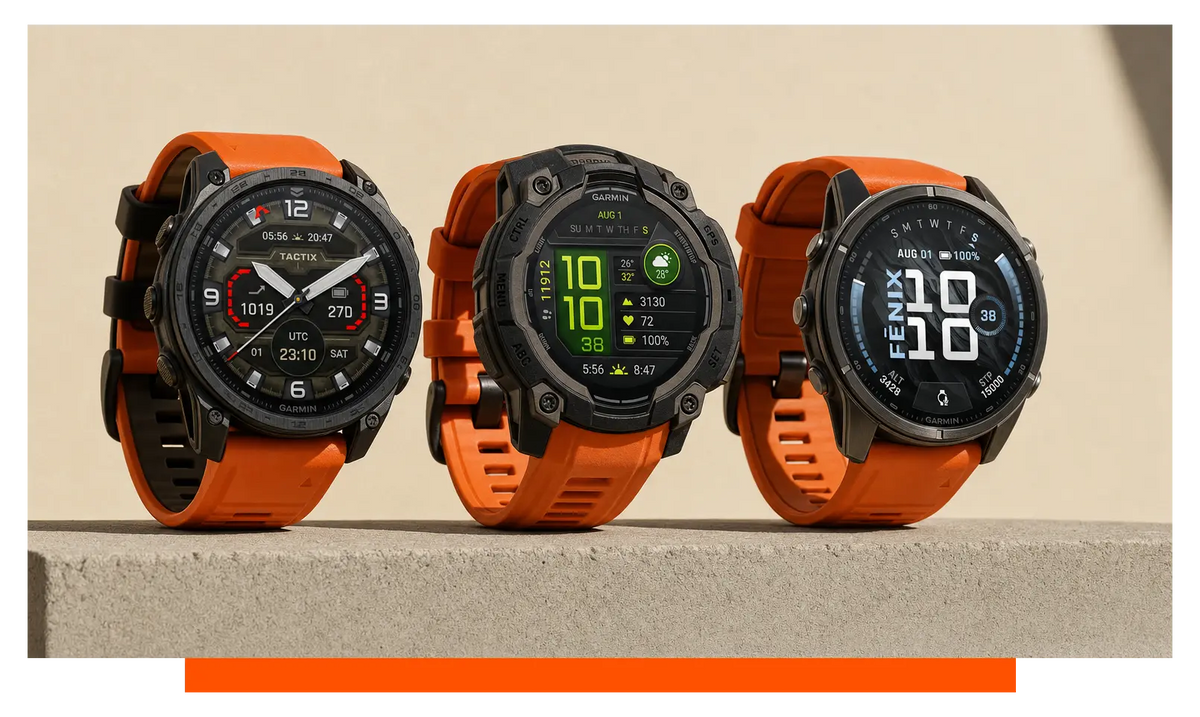
Garmin Tactix 8 is the best Garmin watch for military personnel who genuinely need mission controls, offline mapping and a field-ready strap setup. Choose Instinct 3 for a lighter, lower-profile daily field watch, Enduro 4 for long deployments between charges, or Fenix 9 for premium training and navigation without prioritising tactical tools.
On this page
- The best Garmin military watches at a glance
- What makes a good Garmin watch for military use
- Best for tactical missions - 1. Garmin Tactix 8
- Best lighter field watch - 2. Garmin Instinct 3
- Best for training and navigation - 3. Garmin Fenix 9
- Best for long deployments - 4. Garmin Enduro 4
- Which Garmin military watch should you choose?
- Frequently asked questions
The best Garmin military watches at a glance
The Tactix 8 is the specialist choice, while the other watches make more sense when low weight, endurance or broader sports use matters more than dedicated mission controls.
| Watch | Best for | Deciding feature | GPS battery life | Offline maps | Display | Case weight | Case material | Bezel material |
|---|---|---|---|---|---|---|---|---|
| Garmin Tactix 8 | Tactical missions | Stealth mode | Up to 149 hours with solar | Yes | AMOLED / solar-charged display | 92 g | Fibre-reinforced polymer | Titanium |
| Garmin Instinct 3 | Daily field wear | Solar charging | Up to 260 hours with solar | No | AMOLED / MIP | 53 g | Fibre-reinforced polymer | Fibre-reinforced polymer / aluminium |
| Garmin Fenix 9 | Training and navigation | 40 m dive rating | Up to 54 hours | Yes | AMOLED | 75 g | Fibre-reinforced polymer | Titanium |
| Garmin Enduro 4 | Extended time away | 320 hours with solar | Up to 320 hours with solar | Yes | MIP | 66 g | Fibre-reinforced polymer | Titanium |
The deciding issue is simple: do you need dedicated tactical privacy, night-vision and mission tools, or merely a tough GPS watch that performs well during training and time in the field?
What makes a good Garmin watch for military use
A good choice balances mission controls, usable navigation, realistic battery endurance and all-day comfort rather than simply putting the toughest-looking watch on your wrist.
Mission controls versus ordinary outdoor features
Stealth controls, night-vision compatibility, ballistic support and jump planning are specialist functions. They can justify a tactical model when your role calls for them, but they are not automatically useful to every service member, reservist or outdoor instructor.
Night Vision mode matters because an ordinary bright screen can interfere with dark-adapted vision and may be distracting around night-vision equipment. The mode dims or changes the display, disables selected light-emitting functions and can reduce detectability. That is quite different from turning down a normal screen before bed.
Offline maps and GPS endurance
Offline mapping puts terrain and route detail on the wrist without relying on a phone connection. It is valuable when you need to inspect a route at a junction or follow a planned course; basic route guidance may be enough if you only need a bearing and breadcrumb trail.
Battery claims also need context. Long smartwatch runtime is useful in camp, but GPS endurance is the more relevant figure when navigation and activity recording remain active through field training, rucking or a multi-day trip. Solar charging can extend that runtime in sustained bright outdoor conditions, though your exposure to sunlight still matters.
AMOLED, MIP and visibility settings
AMOLED gives you a bright colour display with detailed maps and adjustable brightness, making information easy to read at a glance. Keeping the display always on shortens battery life, so it suits you best when map clarity matters more than maximum time between charges.
MIP prioritises outdoor readability and low energy use. Solar MIP is therefore particularly practical for extended field use in daylight. Display type does not replace a proper Night Vision mode, however: brightness control and compatibility with night-vision equipment are separate buying considerations.
Case weight and strap fit
A watch worn continuously must remain comfortable under uniform cuffs, in the gym and during sleep. Case weight is only part of that equation; case diameter and strap material determine whether the watch stays planted without being overtightened.
Nylon is practical when you want low bulk and easy adjustment. Silicone handles sweat and water well, while metal, Milanese and leather options can make the same watch more suitable away from field training. Check the connector width against the case size before changing straps because larger versions of the same Garmin can use a wider fitment.
Best for tactical missions - 1. Garmin Tactix 8
The Garmin Tactix 8 earns the top place because it combines dedicated tactical controls with offline mapping, long solar-assisted GPS endurance and dive capability.
This is the model for roles where Stealth mode, Night Vision mode, ballistic support or jump planning are actual requirements rather than interesting extras. It supports multi-band GPS and keeps maps on the watch, giving you more useful terrain context when a phone is unavailable.
- GPS battery life: up to 149 hours with solar
- Offline mapping: yes
- Diving capability: 40 m
- Case weight: 92 g
- Case sizes: 47 mm or 51 mm
There is a trade-off. At 92 g, it is the heaviest watch here, so the strap setup matters if you wear it through work, training and sleep. The 47 mm case takes 22 mm straps, while the 51 mm case takes 26 mm straps.
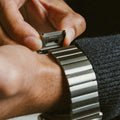
Our catalogue data shows silicone, nylon, leather, Milanese, metal and titanium options for the 47 mm model. A nylon strap can reduce the sense of bulk and gives fine adjustment over the wrist; silicone is the practical alternative for water, sweat and repeated washing. You can compare Garmin Tactix 8 - 47mm straps by material.
At the time of writing, the Garmin Tactix 8 was listed at £1,129 for the 47 mm case and £1,219 for the 51 mm case. That premium makes sense only when its specialist controls solve a genuine need. If you mainly run, lift, hike and record loaded marches, a lighter Garmin can be the smarter watch.
Best lighter field watch - 2. Garmin Instinct 3
The Garmin Instinct 3 is the better daily field watch when low weight, solar-assisted endurance and a less intrusive fit matter more than wrist-based maps.
Its 53 g case is much easier to forget under a cuff or during sleep than the Tactix 8. Multi-band GPS and a built-in LED flashlight cover practical outdoor use, while the choice of AMOLED or MIP lets you favour a brighter colour screen or longer solar-assisted runtime.
- GPS battery life: up to 260 hours with solar
- Offline mapping: no
- Case weight: 53 g
- Case sizes: 45 mm or 50 mm
The missing offline mapping is the key limitation. Choose it when route guidance is enough; choose a mapped model if you expect to inspect terrain and alternative paths directly on the watch.
If night-vision compatibility and tactical controls matter, look specifically at the Instinct 3 Tactical Edition rather than assuming every configuration has the same mission features. Night Vision mode is available on that tactical version.
Fitment changes with the case. The 45 mm Instinct 3 takes 22 mm straps, while the 50 mm version takes 26 mm straps. Silicone, nylon, leather, Milanese, metal and titanium are available for the 45 mm case in our feed, giving you more ways to tune comfort than the stock appearance suggests. See the available Garmin Instinct 3 - 45mm straps.
At the time of writing, the Garmin Instinct 3 was listed at £389 for the 45 mm case and £429.99 for the 50 mm case. It is the sensible value choice here if you do not need offline maps or the full tactix toolset.
Best for training and navigation - 3. Garmin Fenix 9
The Garmin Fenix 9 is the strongest all-round choice for serious training, offline navigation and dive use without making tactical controls the priority.
Its AMOLED display presents colour maps clearly, while offline mapping and multi-band GPS suit running, hiking and route-based training. The 40 m dive rating also makes it the alternative to the Tactix 8 when the same watch must cover dive training.
- GPS battery life: up to 54 hours
- Offline mapping: yes
- Diving capability: 40 m
- Case weight: 75 g
- Case sizes: 43 mm, 47 mm or 51 mm
The shorter GPS figure is the compromise. It is ample for routine training and many outdoor trips, but the Enduro 4 and solar Tactix 8 are better matched to extended periods away from charging.
The three case sizes make fit easier to get right. The 43 mm case uses 20 mm straps, the 47 mm case uses 22 mm straps and the 51 mm case uses 26 mm straps. Our feed has silicone, nylon, leather, Milanese and metal choices across those Fenix 9 sizes; the Garmin Fenix 9 - 47mm straps cover the middle fit.
At the time of writing, the Garmin Fenix 9 was listed at £845.55 for the 43 mm case, £859 for the 47 mm case and £949.99 for the 51 mm case. Choose it over the tactix when premium sports, mapping and dive features will be used more often than mission-specific controls.
Best for long deployments - 4. Garmin Enduro 4
The Garmin Enduro 4 is the best choice when GPS endurance and time away from charging outweigh tactical controls, dive support and a compact case.
Its solar MIP display favours outdoor visibility and low energy use rather than the richer presentation of AMOLED. With offline maps and multi-band GPS, it still provides proper navigation rather than asking you to trade endurance for basic breadcrumb guidance.
- GPS battery life: up to 320 hours with solar
- Offline mapping: yes
- Case weight: 66 g
- Case size: 51 mm
- Strap width: 26 mm
The large case is the point to test carefully. Its 66 g weight is moderate for the size, but a 51 mm watch may still catch on a close cuff or feel broad during sleep. A correctly adjusted nylon strap can help spread the load, while silicone is easier to rinse after sweaty training.
Silicone, nylon, leather, Milanese and metal options are available in our feed, so you are not limited to an endurance-focused factory setup. Browse Garmin Enduro 4 straps if the supplied material is not comfortable enough for continuous wear.
At the time of writing, the Garmin Enduro 4 was listed at £799.99. It is the clear endurance specialist, but the tactix remains the more appropriate military tool when tactical privacy and night-vision functions decide the purchase.
Which Garmin military watch should you choose?
Choose according to the feature you cannot sensibly replace: tactical controls, low-profile comfort, dive-ready training or maximum GPS endurance.
- If your role requires mission-specific controls: choose the Garmin Tactix 8 for Stealth mode, Night Vision mode, offline maps and specialist tactical functions.
- If you want a lighter watch for uniform, gym and sleep: choose the Garmin Instinct 3, provided you can work without offline maps.
- If training, mapping and diving matter more than tactical tools: choose the Garmin Fenix 9.
- If you spend extended periods away from charging: choose the Garmin Enduro 4 for the longest stated GPS runtime here.
- If wrist comfort is already a concern: compare the case size and strap width before focusing on software. The lightest watch can still fit poorly with the wrong strap tension or material.
Do not pay the tactical premium merely for a rugged appearance. The Tactix 8 wins when its mission controls will be used; otherwise, the lighter Instinct 3, training-led Fenix 9 or endurance-focused Enduro 4 gives you a more targeted answer.
Frequently asked questions
These answers cover the operational and training details that commonly affect the final choice.
Does stealth mode make a Garmin watch safe to use on operations?
No. Stealth Mode keeps the watch operating while disabling wireless communications and stopping the storage and sharing of GPS position, but it is not a blanket operational-security approval.
Which Garmin watch has Applied Ballistics?
The Tactix 8 has a preloaded Applied Ballistics solver, while the Instinct 3 Tactical Edition supports the solver with an unlock fee required.
Is Garmin rucking activity useful for weighted marches?
Yes. It lets you enter pack weight so the recorded activity better reflects the exertion of a loaded march; Tactix 8 and Instinct 3 include the activity, while Enduro 4 also provides pack-weight adjustment and rucking targets during an activity.
Bottom line: Tactix 8 is the best military-specific Garmin, but it is not automatically the best watch for every military wearer. Let the need for tactical tools - not the styling - decide.


Leave a comment
All comments are moderated before being published.
This site is protected by hCaptcha and the hCaptcha Privacy Policy and Terms of Service apply.