


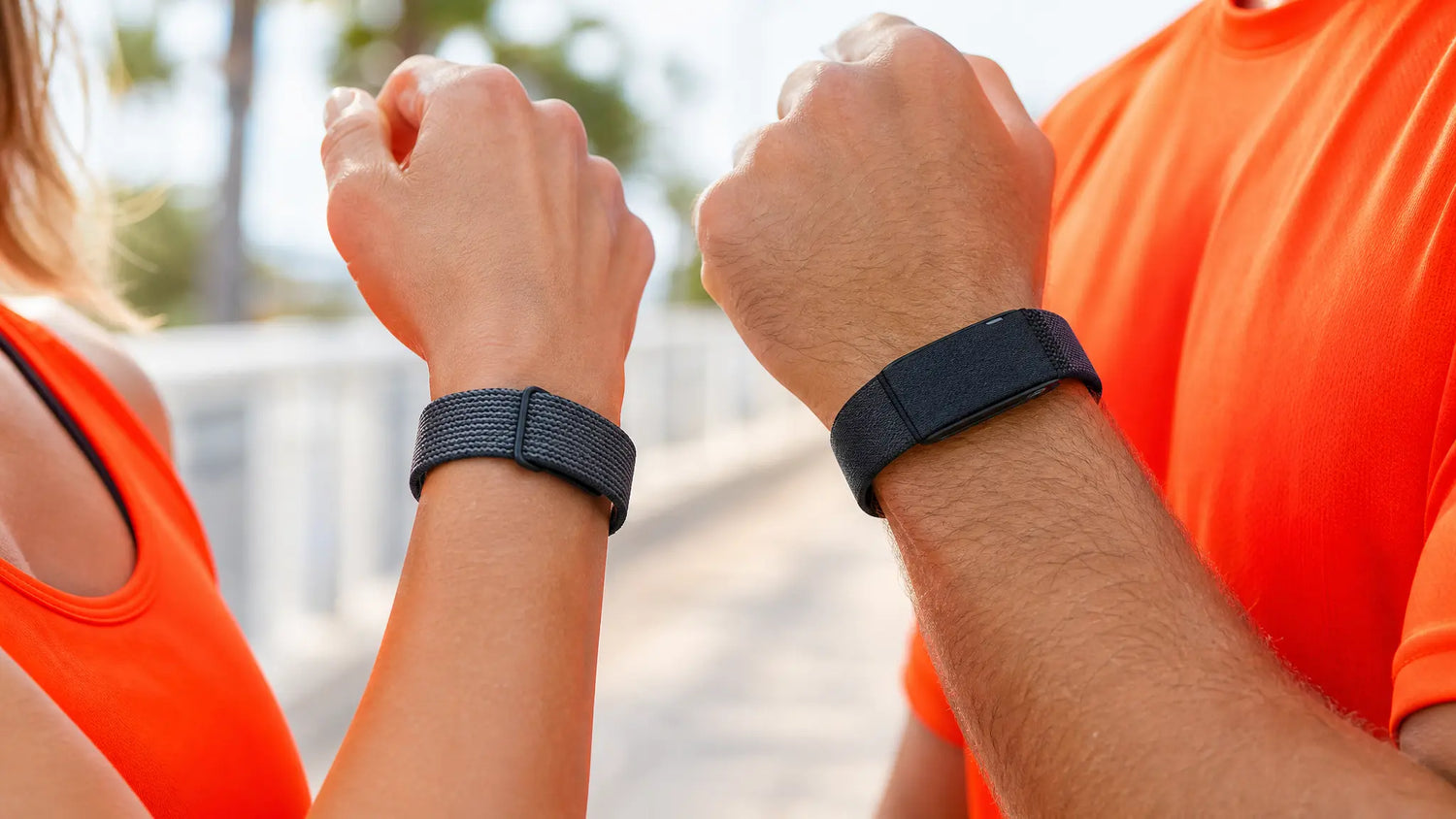
Garmin Cirqa vs Fitbit Air: which fitness tracker is right for you?
With the introduction of the Garmin Cirqa, Garmin is entering a new market. While the brand is best known for its sports watches and advanced GPS wearables, the Cirqa takes a different approach with a minimalist fitness tracker without a display. Garmin is targeting users who want to monitor their health and activity without constantly looking at a screen.
The Fitbit Air follows a similar philosophy. This fitness tracker is also designed to monitor your health and daily activity in the background. No notifications, no apps and no distractions, but instead a subtle wearable that focuses entirely on health and movement.
Despite these similarities, both models are quite different. Garmin focuses on detailed sports analysis, long battery life and integration within the Garmin ecosystem. Fitbit takes a simpler approach, focusing on accessibility and an easy-to-use experience.
In this comparison, we’ll look at all the key differences between the two trackers. We’ll compare the design, battery life, sensors, health features, sports capabilities, smart features and, of course, the price. This will help you decide which fitness tracker best suits your needs.
In brief
- The Garmin Cirqa is particularly suited to athletes and active users who want detailed insights and analysis.
- The Fitbit Air is aimed at users who mainly want to monitor their everyday health.
- Both fitness trackers have no display, helping extend battery life and reducing distractions.
- Garmin offers significantly more sports features and detailed statistics through Garmin Connect.
- Fitbit stands out with its ease of use and straightforward app experience for everyday users.
Key differences
| Feature | Garmin Cirqa | Fitbit Air |
|---|---|---|
| Display | No display | No display |
| Battery life | Up to 10 days | Up to 7 days |
| Sports profiles | More than 80 activities | Focused on everyday activities |
| Health tracking | Very comprehensive | Comprehensive |
| GPS | Via connected smartphone | Via connected smartphone |
| App | Garmin Connect | Fitbit app |
| Subscription required | No | No |
| Best suited for | Athletes and active users | Everyday health tracking |
Although both fitness trackers share the same minimalist approach, they are aimed at different audiences.
The Garmin Cirqa is clearly designed for users who want to go beyond basic health tracking and analyse their sports performance in detail. Fitbit takes a simpler approach and focuses on providing an accessible and user-friendly experience.
Specifications overview
| Specification | Garmin Cirqa | Fitbit Air |
|---|---|---|
| Type | Fitness tracker without display | Fitness tracker without display |
| Display | None | None |
| Battery life | Up to 10 days | Up to 7 days |
| Water resistance | Yes | Yes |
| Heart rate monitoring | Yes | Yes |
| Sleep tracking | Yes | Yes |
| Stress tracking | Yes | Yes |
| GPS | Via smartphone | Via smartphone |
| Health app | Garmin Connect | Fitbit app |
| Compatibility | Android and iOS | Android and iOS |
On paper, both fitness trackers look very similar. They both feature a screen-free design, track your daily activity and provide insights into important health metrics such as heart rate and sleep.
However, the differences quickly become clear. The Garmin Cirqa has been developed as an extension of the Garmin ecosystem and offers much deeper analysis for athletes and active users. Fitbit focuses on keeping things simple, making it a better fit for people who want an easy way to monitor their health and daily movement.
Display
Perhaps the biggest feature of both the Garmin Cirqa and Fitbit Air is what they do not have: a display.
While almost all modern smartwatches and fitness trackers come with an AMOLED or LCD screen, both Garmin and Fitbit have deliberately chosen a screen-free design.
This approach offers several advantages. First of all, the lack of a display helps to significantly extend battery life. A screen is one of the biggest power consumers in any wearable device. In addition, you are not constantly distracted by notifications, messages or other information appearing on your wrist. The focus remains entirely on collecting health and activity data.
All information is viewed through the accompanying smartphone apps. Garmin uses Garmin Connect, while Fitbit relies on the Fitbit app. Both platforms provide insights into your daily activity, sleep, heart rate and other health metrics.
Garmin Cirqa
The Garmin Cirqa does not feature a screen. Instead, the tracker continuously records your activity and automatically synchronises your data with Garmin Connect.
Through the app, you can view detailed graphs, performance analysis and personalised insights.
For athletes, this is a major advantage. Garmin Connect is widely recognised as one of the most comprehensive health and sports platforms available. Users can analyse long-term trends, monitor training load and accurately track their progress over time.
Fitbit Air
The Fitbit Air also has no display. The wearable works entirely in the background and synchronises your data with the Fitbit app.
Fitbit focuses on simplicity. The app presents your collected data in a clear and accessible way, allowing you to quickly understand your daily movement, sleep and overall health without having to navigate through dozens of statistics.
When it comes to hardware, there is no clear winner. Both models deliberately choose a screen-free approach.
The main difference comes down to the software experience. Garmin Connect offers much deeper analysis and is particularly suited to dedicated athletes. The Fitbit app is simpler and more accessible, making it a better choice for users who mainly want a clear overview of their everyday health.
Battery life
One of the biggest advantages of screen-free fitness trackers is battery life. Since there is no display consuming power, these wearables can last significantly longer than the average smartwatch.
Garmin Cirqa
Garmin states that the Cirqa offers up to 10 days of battery life with normal use.
This means you can wear the tracker for well over a week without needing to recharge it. As a result, sleep tracking, recovery insights and daily activity monitoring can continue without interruption.
For many users, this means charging the tracker only once a week.
Fitbit Air
The Fitbit Air also offers impressive battery life, although it falls slightly behind Garmin with up to around 7 days of use.
You still do not need to charge the tracker every day, but users will need to reach for the charger a little more often compared with the Garmin Cirqa.
Practical differences
In everyday use, a three-day difference may not seem significant, but over the course of a year it results in dozens of additional charging cycles.
For users who want to track their sleep every night or regularly spend several days away from home, longer battery life can make a meaningful difference.
Both trackers perform very well, but Garmin takes this category thanks to its longer battery life.
Sensors
The quality of a fitness tracker is largely determined by the sensors inside the device. The more accurately a wearable can collect data, the more detailed the insights and analysis can become.
Garmin Cirqa
Garmin equips the Cirqa with several sensors designed to measure metrics including:
- Heart rate
- Stress levels
- Sleep quality
- Movement
- Daily activity
- Recovery
- Daily energy levels (Body Battery)
- Respiration
The tracker also uses your smartphone’s GPS connection when recording outdoor activities.
All collected data is then analysed in detail within Garmin Connect.
Fitbit Air
The Fitbit Air also includes sensors for tracking essential health metrics.
These include:
- Heart rate
- Sleep
- Daily activity
- Movement
- Calorie burn
For most users, these measurements are more than enough to gain insight into their health and daily activity levels.
Which is better?
Both fitness trackers offer reliable sensors, but Garmin simply provides more measurement options and more detailed analysis of the collected data.
For athletes and users who want the deepest possible understanding of their health and performance, this is a clear advantage.
Health features
Health monitoring is one of the main reasons why people choose to buy a fitness tracker today. Both Garmin and Fitbit provide detailed insights into your everyday health, but the way both brands collect and present this information is quite different.
While Fitbit focuses mainly on clear and accessible health insights for everyday users, Garmin takes things a step further with more advanced analysis that also appeals to athletes and users who actively want to improve their health.
Garmin Cirqa
The Garmin Cirqa offers a wide range of health features. Thanks to its integrated sensors, the tracker continuously monitors various body metrics throughout the day, giving you a complete overview of your health.
The Cirqa continuously measures your heart rate and helps identify changes throughout the day. It also analyses your sleep quality and tracks different sleep stages. This means you can see not only how long you slept, but also how well your body actually recovered.
One of Garmin’s best-known features is Body Battery. This combines data such as stress, activity, heart rate and sleep to estimate your energy levels throughout the day.
For example, it can help you understand when your body is ready for an intense workout or when it may be better to prioritise recovery and rest.
Stress tracking is also included. The Cirqa monitors your stress levels throughout the day and provides insight into moments when your body may be experiencing increased strain. The tracker also supports respiration tracking and provides additional recovery insights.
All information is presented clearly within Garmin Connect, where you can view detailed graphs, trends and personalised insights.
Fitbit Air
The Fitbit Air also places a strong focus on health tracking. The tracker monitors key metrics such as heart rate, sleep and daily activity, presenting all information clearly within the Fitbit app.
Fitbit has built a strong reputation for making health data easy to understand. Users can quickly see their daily movement, rest periods and overall fitness levels without needing to interpret complex statistics.
For users who mainly want to monitor their everyday health and become more aware of their activity and sleep habits, Fitbit offers a simple and accessible experience.
Which is better?
Both fitness trackers offer excellent health features, but Garmin clearly goes further when it comes to the depth of analysis.
Features such as Body Battery, detailed recovery information and the extensive reporting available through Garmin Connect make the Cirqa a better choice for users who want more than just basic health statistics.
Fitbit remains an excellent option for people who prefer clear, simple and easy-to-understand health insights.
Sports features
Although both fitness trackers record your daily movement, the differences become much clearer when looking at sports functionality.
Garmin has built its reputation around sports watches for runners, cyclists, triathletes and other dedicated athletes. That experience is clearly reflected in the Cirqa.
Garmin Cirqa
The Garmin Cirqa supports more than 80 different sports profiles. These include activities such as:
- Walking
- Running
- Cycling
- Strength training
- Yoga
- HIIT workouts
- Swimming
- And many more
During an activity, the tracker records data such as:
- Distance (via connected smartphone)
- Heart rate
- Workout duration
- Calorie burn
- Intensity
- Recovery data
After your workout, all information is automatically synchronised with Garmin Connect. Here, you can analyse your sessions, compare performance and track your progress over longer periods.
For users who already own a Garmin sports watch or Edge cycling computer, the Cirqa also works as a valuable addition within the same ecosystem.
Fitbit Air
The Fitbit Air also supports activity and exercise tracking, but it is clearly aimed more towards everyday users.
The focus is mainly on daily movement, walks, lighter workouts and achieving personal activity goals. For many users, this is more than enough, but the level of analysis is less advanced compared with Garmin.
Those who train regularly or want detailed performance insights may find Fitbit more limited over time.
Automatic activity detection
Both trackers can automatically recognise certain activities, meaning you do not always need to manually start a workout.
This makes both wearables suitable for users who are active throughout the day without wanting to constantly interact with their tracker.
For sports users, the difference is quite clear.
Garmin offers more sports profiles, deeper analysis and an ecosystem specifically designed around improving performance.
Fitbit focuses more on general movement and health, meaning its sports features are simpler.
Smart features
Although neither model is a smartwatch, both devices include smart features that make everyday use more convenient.
Garmin Cirqa
The Garmin Cirqa works seamlessly with Garmin Connect, the platform where all your health and sports data is collected.
You also benefit from several smart features, including:
- Automatic synchronisation with Garmin Connect
- Integration with other Garmin devices, such as sports watches and Edge cycling computers
- LiveTrack support during activities
- Software updates through your smartphone
- Compatibility with both Android and iPhone
Because the Cirqa does not have a display, you will not receive notifications, messages or phone calls on your wrist. Garmin has made this a deliberate choice to keep the tracker calm, minimal and distraction-free.
Fitbit Air
The Fitbit Air also automatically synchronises with the Fitbit app, where all health information is displayed clearly.
The app provides easy-to-understand dashboards, personal statistics and helps users stay motivated towards their daily activity goals.
Just like the Garmin Cirqa, the Fitbit Air does not offer features such as notifications, calls or apps directly on the wearable itself.
If you are looking for a fitness tracker that becomes part of a complete sports ecosystem, Garmin has a clear advantage.
If you prefer a simple wearable with an easy-to-use app and straightforward health insights, Fitbit is an excellent choice.
Price
Price is, of course, an important factor when choosing a new fitness tracker.
The Garmin Cirqa has a recommended retail price of £199.99. This places it firmly in the premium segment. However, users get access to Garmin Connect without monthly subscription costs and benefit from advanced sports and health analysis.
The Fitbit Air is significantly more affordable at £109.99. This makes it an attractive option for users looking for a stylish fitness tracker for everyday use without needing advanced sports statistics.
Although the Garmin Cirqa requires a higher upfront investment, you also receive more advanced features, longer battery life and a more complete sports platform.
Which offers the best value for money?
This mainly depends on how you plan to use your tracker.
If your main priorities are health tracking, sleep monitoring and everyday activity, the Fitbit Air offers excellent value for money.
If you are more focused on sports, want detailed insights and already use the Garmin ecosystem, the higher price of the Garmin Cirqa is justified by its broader feature set and more advanced capabilities.
Where the Garmin Cirqa is better
Although both the Garmin Cirqa and Fitbit Air are designed for users who want to take better care of their health, the Garmin Cirqa is clearly the more advanced fitness tracker.
Athletes, active users and people who enjoy detailed insights benefit the most from the additional features within the Garmin ecosystem.
1. More advanced sports features
The biggest advantage of the Garmin Cirqa is its focus on sports. With support for more than 80 sports profiles, the tracker is suitable for a wide range of activities.
Whether you enjoy running, cycling, walking, strength training or a combination of different workouts, Garmin provides detailed tracking and analysis.
For users who want to improve their performance, the combination of the Cirqa and Garmin Connect is a major advantage. You do not only see what you have done, but also how your body responds to your activities.
2. Better recovery and energy insights
Garmin stands out with features such as Body Battery and detailed recovery analysis.
These features help you understand when your body is ready for exercise and when it may be better to prioritise rest.
For people who train several times a week, these insights can be particularly valuable.
3. Longer battery life
With a battery life of up to 10 days, the Garmin Cirqa lasts longer than the Fitbit Air.
This means fewer charging moments and a greater chance of wearing the tracker continuously. This is especially useful for sleep tracking and users who want to collect as much health data as possible.
4. Stronger ecosystem
Garmin has one of the most complete ecosystems in the sports world.
If you already use a Garmin sports watch, cycling computer or other Garmin accessories, the Cirqa fits perfectly into your existing setup.
All your data is collected within Garmin Connect, giving you one complete overview of your activities, health and performance.
Where the Fitbit Air is better
Although the Garmin Cirqa offers more advanced features in many areas, that does not automatically mean it is the best choice for everyone.
The Fitbit Air also has several clear advantages.
1. Easier to use
The biggest advantage of Fitbit is accessibility.
The Fitbit app is designed with simplicity in mind and presents health data in a way that almost anyone can understand.
You do not need to be a sports expert to benefit from the tracker. For users who mainly want to know how much they move, how they sleep and how their health develops over time, Fitbit provides an enjoyable and straightforward experience.
2. Lower purchase price
The Fitbit Air is more affordable than the Garmin Cirqa.
For users who do not need advanced sports analysis, this makes it an attractive option. You get the most important health features without paying for functions you may never use.
3. Designed for everyday health tracking
The Fitbit Air is mainly designed for people who want to live a healthier lifestyle and gain more insight into their daily habits.
Examples include:
- Becoming more active throughout the day
- Understanding sleep patterns better
- Making healthier lifestyle choices
- Achieving daily activity goals
For this audience, Fitbit provides exactly what they need without unnecessary complexity.
Garmin Cirqa vs Fitbit Air: which one should you buy?
The choice between the Garmin Cirqa and Fitbit Air mainly depends on your personal goals.
If you exercise regularly, want to improve your performance and enjoy analysing detailed data, the Garmin Cirqa is the better choice. The combination of advanced sports features, longer battery life and Garmin Connect makes it a very complete fitness tracker.
The Fitbit Air is better suited to users who value simplicity. If you mainly want insights into your health, sleep and daily movement without being overwhelmed by statistics, Fitbit offers an easy-to-use solution at a lower price.
In short:
Choose the Garmin Cirqa if you:
✅ Exercise regularly
✅ Want detailed health analysis
✅ Value sports data and performance insights
✅ Already use Garmin products
✅ Want longer battery life
Choose the Fitbit Air if you:
✅ Mainly want to track your everyday health
✅ Prefer a simple and easy-to-use app
✅ Do not need advanced sports features
✅ Want to spend less
✅ Prefer a discreet fitness tracker
Conclusion: Garmin Cirqa vs Fitbit Air
The Garmin Cirqa and Fitbit Air prove that a fitness tracker does not need a display to be valuable.
Both models follow the same core idea: tracking your health and activity without distractions. However, Garmin and Fitbit take different approaches.
The Garmin Cirqa is the better choice for active users who want maximum insight into their training and health. Its advanced sports features, longer battery life and strong integration with Garmin Connect make it a powerful tracker for athletes and dedicated users.
The Fitbit Air is better suited for people who value simplicity. Thanks to its easy-to-use app and lower price, it is an appealing choice for anyone who mainly wants to become more aware of their health and daily movement.
FAQ Garmin Cirqa vs Fitbit Air
Does the Garmin Cirqa have a display?
No, the Garmin Cirqa does not have a display. The tracker has been intentionally designed without a screen to reduce distractions and extend battery life. All information is viewed through the Garmin Connect app.
Is the Garmin Cirqa better than the Fitbit Air?
That depends on how you plan to use it. The Garmin Cirqa is the better choice for athletes thanks to its more advanced sports features and analysis. The Fitbit Air is more suitable for users who mainly want simple and accessible health insights.
Can you replace the straps on the Fitbit Air and Garmin Cirqa?
Yes, the straps can be replaced on both models. Fitbit Air straps are available through official channels as well as various third-party retailers. As the Garmin Cirqa has only recently launched, availability of replacement bands is currently more limited.
Which fitness tracker has the longest battery life?
The Garmin Cirqa offers the longer battery life, with up to 10 days of use compared with the Fitbit Air.
Does the Garmin Cirqa work without a subscription?
Yes, the Garmin Cirqa works without a mandatory subscription. All essential health and sports features are available through Garmin Connect.
Can I use the Garmin Cirqa for sports?
Yes, the Garmin Cirqa supports many different sports activities and tracks metrics such as heart rate, activity levels, workouts and recovery.
Does the Fitbit Air have GPS?
The Fitbit Air uses your smartphone’s GPS connection when recording outdoor activities.
Which fitness tracker is better for sleep tracking?
Both trackers offer sleep tracking. Garmin provides more detailed recovery and energy insights, while Fitbit focuses on presenting sleep data in a simple and easy-to-understand way.


Leave a comment
All comments are moderated before being published.
This site is protected by hCaptcha and the hCaptcha Privacy Policy and Terms of Service apply.